Why temperature awareness matters
Not every room in a home holds heat in the same way. Some spaces warm up quickly, while others cool down faster because of draughts, poor insulation, or how often they are used. A room can feel chilly long before anyone thinks to change the heating.
This is where smart home temperature control becomes useful. Instead of waiting for someone to notice the cold, the system can monitor conditions continuously and react earlier. That helps keep the home comfortable and reduces the need for constant adjustments.
It also matters in rooms that are used less often. Spare rooms, hallways, bedrooms, and utility spaces can lose heat without being noticed straight away. Smart monitoring helps keep those areas under control.
How smart homes detect cold
The key part of this setup is a temperature sensor. These sensors measure the temperature in a room and send that information to your smart home system. If the room drops below a set level, the system can trigger a response.
A smart thermostat works alongside those sensors to manage heating more accurately. Rather than relying on one central reading for the whole home, it can help create a fuller picture of what is happening in different rooms. That gives you better control and a more consistent level of comfort.
Some systems also use occupancy detection. If a room is empty, there is no need to heat it heavily. If someone is about to use it, the system can warm it up in advance. That makes the whole setup feel more intelligent and more efficient.
What automation can do
Once a home knows that a room is getting cold, it can respond in a few different ways. The most obvious is to increase the heating automatically. In some homes, this may happen across a whole zone, while in others it may only affect one room.
The system can also send an alert to your phone if temperatures drop unexpectedly. That is especially useful if you are away from home or want to keep an eye on colder spaces during winter. It can help you spot problems before they turn into bigger issues.
More advanced automation can preheat rooms before you need them. For example, your living room can be made comfortable before you return home, or your bedroom can be ready at bedtime. Small details like that make a smart home feel genuinely helpful rather than just clever.
Devices that make it work
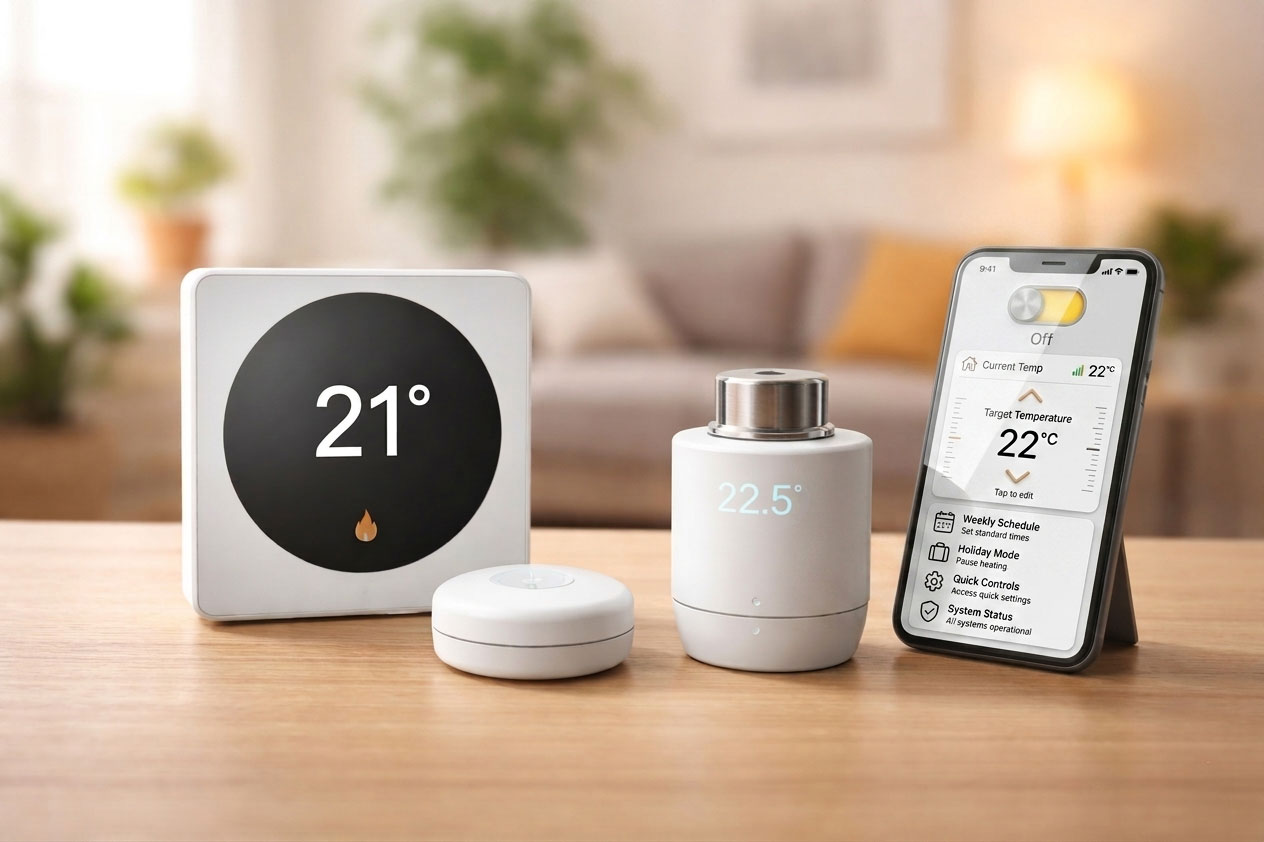
A strong smart heating setup usually starts with a smart thermostat. This acts as the central control point and helps manage heating more intelligently. It becomes even more effective when combined with room sensors.
Wireless temperature sensors are useful in rooms where you want more precise monitoring. They are easy to place in different parts of the home and can provide a more accurate sense of how each room actually feels. That makes them ideal for spaces that tend to run colder than others.
Smart radiator valves can take control even further by allowing heating to be adjusted room by room. When paired with motion or occupancy sensors, they help create a system that responds to how people actually use the home rather than following a fixed schedule.
Why this feels better than manual heating
Manual heating depends on someone noticing the problem and doing something about it. A smart home removes that delay. It can spot a temperature drop early and adjust automatically before discomfort builds up.
That creates a smoother experience. Instead of constantly changing settings, you can let the system handle the background decisions. The result is a home that feels more consistent and easier to manage.
It also makes everyday life more comfortable. Small temperature changes can be surprisingly noticeable, especially in winter. A home that stays steady feels calmer and more pleasant to live in.
Energy efficiency benefits
Smart heating is not just about comfort. It can also help reduce energy waste. If the system knows which rooms are being used and which are empty, it can focus heating where it is needed most.
That means less unnecessary heating in unused rooms and better overall efficiency. Over time, that can make a real difference, especially in larger homes or homes with multiple zones.
This is one of the reasons smart heating is so practical. It improves comfort while also helping the home run more intelligently in the background.
Where smart cold detection works best
This kind of setup is especially useful in homes with uneven heating, changing room usage, or older insulation. Bedrooms are a good example because they often need a different temperature from the rest of the house.
It also works well in larger properties, spare rooms, loft spaces, and utility areas where temperature changes may go unnoticed. In those spaces, early detection can make a big difference.
Even in a smaller home, smart heating can still help create a more balanced and predictable environment. The benefit is not just convenience — it is better control.
A smarter way to stay comfortable
A home that notices temperature changes before you do feels more thoughtful and responsive. It keeps rooms comfortable, reduces manual effort, and helps heating work more efficiently.
That is what makes temperature automation such a strong starting point for smart home automation. It solves a real everyday problem in a simple and practical way.
If you want a home that feels more intelligent, temperature control is one of the best places to begin.